
Materials
Gold Jewellery Purity Guide: 9K, 10K, 14K, 18K and 22K
What 9K, 10K, 14K, 18K and 22K gold really mean, how purity affects colour, strength and price, and how gold hallmarking works for export.
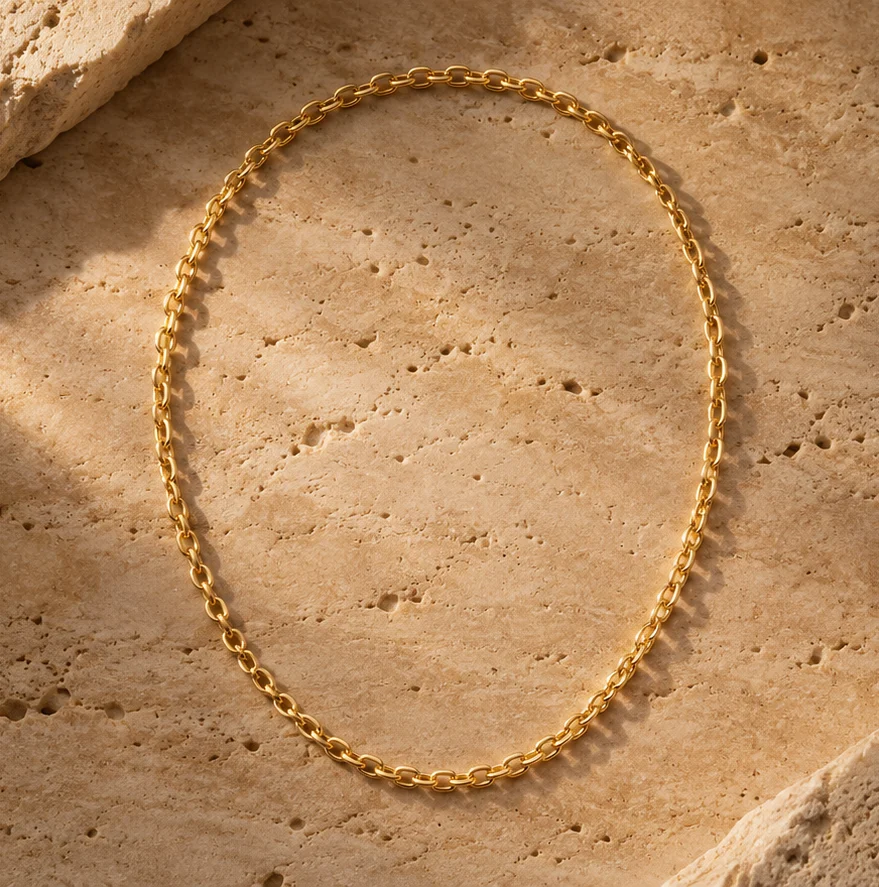
What karat means in gold jewellery
Pure gold is 24 karat. The karat number tells you how many parts out of 24 are pure gold, and the rest is a mix of other metals such as silver, copper, zinc or palladium. So 18K gold is 18 parts gold and 6 parts alloy, which works out to 75% gold.
Those alloy metals are not filler. They decide how hard the gold is, how well it holds a stone, and what colour it turns out. One small point that confuses a lot of buyers: karat (with a K) measures gold purity, while carat (with a C) measures the weight of a gemstone.
Gold purity chart: 9K to 24K
9K gold is 37.5% gold and is stamped 375. 10K gold is 41.7% gold, stamped 417. 14K gold is 58.5% gold, stamped 585. 18K gold is 75% gold, stamped 750. 22K gold is 91.6% gold, stamped 916. 24K gold is 99.5% to 99.9% gold, stamped 995 or 999.
The three-digit number is simply the gold content in parts per thousand. If you ever see 750 on a ring, that is 18K gold, whatever the shop label says.
18K gold purity: what 750 means
18K gold is 75% pure gold and 25% alloy. That is why it is stamped 750: 750 parts of pure gold in every 1,000. On export pieces it is marked 18K or 750, following the hallmarking rules of the destination country.
In practice, 18K gives the best balance for diamond jewellery: enough gold for a rich colour and a luxury feel, and enough alloy for the strength to hold prongs and pave settings. It is the most common karat for engagement rings, solitaire pendants and fine diamond jewellery.
To check that a piece is genuine 18K, look for the 750 or 18K stamp. A stamp on its own is the maker's claim; a hallmark from an independent assay office, or an assay report, is what confirms the purity.
22K vs 18K vs 14K gold
22K gold (91.6%) has the deepest yellow colour and the highest gold value, but it is soft. It suits plain gold bridal and investment jewellery better than diamond settings.
18K gold (75%) is the balance point: a rich colour, good strength and a premium feel. It is the standard choice for diamond jewellery.
14K gold (58.5%) is harder and more affordable, with a slightly lighter colour. It is the better choice for everyday rings, chains and pieces that take knocks.
Which gold purity suits which piece
22K is the traditional choice for Indian bridal and temple jewellery. It has a deep yellow colour, but it is soft, so it bends and scratches easily and is not ideal for holding diamonds over many years of wear.
18K is the usual standard for fine diamond jewellery. It has a rich colour, enough strength for prongs and pave settings, and it feels like a luxury piece in the hand.
14K is harder and more scratch resistant than 18K, and it costs less. It is the most popular purity in the United States and works well for everyday rings, chains and men's jewellery.
10K and 9K are the most affordable options and also the toughest. The colour is a little paler because there is less gold in the alloy. 10K is the lowest purity that can be sold as gold in the US, and 9K is widely sold in the UK, Europe and Australia. Both are good choices for budget-friendly lines, fashion pieces and jewellery that will take hard daily wear.
Yellow, white and rose gold
Colour comes from the alloy recipe, not the gold itself. Yellow gold keeps a balance of silver and copper. Rose gold uses more copper, which also makes it slightly harder. White gold is alloyed with whiter metals such as palladium or nickel.
Most white gold is finished with rhodium plating to give it a bright white look. With regular wear that plating thins out and the warmer colour underneath starts to show, so white gold rings usually need re-plating every year or two. If you or your customers have a nickel allergy, ask for nickel-free white gold.
Hallmarking for export markets
Hallmarking rules differ from country to country. The UK, Ireland and several European countries require a hallmark from an official assay office above set weights, while the United States and many other markets rely on an accurate karat stamp together with the maker's trademark. We stamp every export piece with its purity grade and our maker's mark, and arrange assay hallmarking wherever the destination market requires it.
Before production we confirm the stamping and hallmarking rules of your market, so the pieces arrive ready to sell. 9K and 10K gold are popular for export: 9K is a recognised standard in the UK and Ireland, and 10K is the lowest karat that can be sold as gold in the United States.
How purity changes price and weight
The metal cost of a piece depends on how much pure gold is in it. A 9K ring has half the gold content of the same ring in 18K, so the metal cost drops sharply.
There is a second effect that people often miss. Gold is a very dense metal, so lower karat alloys are lighter. The same design cast in 9K will weigh noticeably less than it does in 18K. When you compare quotes, always compare the finished weight and the karat together, not just the price.
Ordering gold jewellery from a manufacturer
At KNC we cast in 9K, 10K, 14K and 18K gold, in yellow, white and rose. When you send a brief, tell us the karat, the colour, the hallmark or stamping you need, a target weight if you have one, and the finish you want.
If you are unsure which purity to choose, ask for a sample of one design in two karats. Holding them side by side tells you more about colour, weight and feel than any chart.
Related KNC services
Frequently asked questions
What is the purity of 18K gold?
18K gold is 75% pure gold and is stamped 750 or 18K, along with any hallmark required in the destination market.
Is 18K gold good for daily wear?
Yes. 18K is strong enough for rings and pendants worn every day, especially with diamonds. If you want more scratch resistance at a lower price, choose 14K.
Is 14K or 18K gold better for an engagement ring?
18K has a richer colour and a more luxurious feel, while 14K is harder, more scratch resistant and more affordable. For a ring worn every day, both work well. Many buyers choose 18K for the look and 14K for durability and budget.
Is 9K gold real gold?
Yes. 9K gold contains 37.5% pure gold and is a recognised gold standard in the UK, Ireland and many other countries.
Does 10K or 14K gold tarnish?
Gold itself does not tarnish, but the alloy metals in lower karats can darken slightly over time, especially with sweat or chemicals. 14K rarely shows this. 10K and 9K may need an occasional polish to stay bright.
How do I check the hallmark on gold jewellery?
Look for the purity grade (for example 18K or 750) and the maker's mark. In hallmarking countries such as the UK, also look for the assay office mark. For extra assurance, ask for an assay or XRF test report with your order.
Why does white gold turn yellowish?
Most white gold is rhodium plated. As the plating wears away, the slightly warmer colour of the alloy shows through. A jeweller can re-plate it to bring back the bright white finish.
Workshop Checklist
Put it into practice
Before you order, decide the karat and colour, confirm the hallmark or stamp you need for your market, ask for the finished gold weight in grams, and approve one sample in the exact alloy you will produce.