
Materials
925 Sterling Silver: A Practical Guide to Silver Jewellery
What 925 sterling silver is, why it tarnishes and how to keep it bright, how silver hallmarking works for export markets, and how to care for silver jewellery.
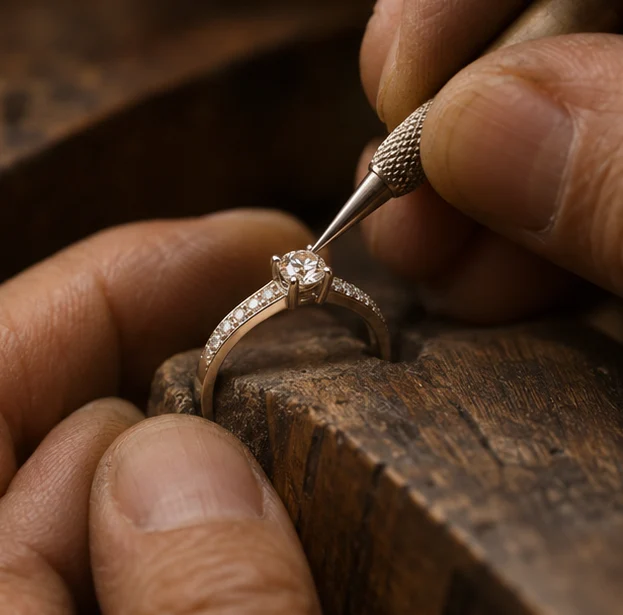
Why pure silver is rarely used for jewellery
Fine silver, at 99.9% purity, is beautiful but very soft. Rings lose their shape, prongs bend and surfaces scratch quickly. That is why almost all silver jewellery is an alloy: a small amount of another metal is added to give it strength while keeping the bright white colour.
925 sterling silver
Sterling silver is 92.5% silver and 7.5% other metal, usually copper. It is stamped 925 and is the standard for silver jewellery around the world. It holds stones securely, takes a high polish and is easy to work, which is why it is used for everything from fine rings to chunky men's chains.
Its one weakness is tarnish. Silver and copper react with sulphur compounds in the air, in sweat, in perfumes and even in rubber bands, and a thin dark layer forms on the surface. Tarnish is not damage, and it polishes away, but it is the main thing customers notice.
Keeping 925 silver bright
Tarnish can be slowed a great deal at the production stage. Rhodium plating seals the surface with a hard, bright white layer, and anti-tarnish packaging keeps pieces fresh on the shelf and in transit.
For plain or oxidised designs where plating is not wanted, a good final polish and sealed, individual packing make the biggest difference. Tell us how and where your pieces will be sold and we will suggest the right finish.
Plated silver: rhodium and gold vermeil
Many silver pieces are plated. Rhodium plating gives a bright, platinum-like white and adds a layer of tarnish protection. Gold plating turns silver into an affordable gold-look piece.
If you sell in the United States, the word vermeil has a specific meaning there: sterling silver plated with gold of at least 10K and at least 2.5 microns thick. Thinner plating should simply be called gold plated.
Silver hallmarking for export markets
Silver stamping rules vary by market. Most buyers expect a 925 stamp with the maker's mark, and countries such as the UK require an assay office hallmark above a set weight.
For buyers, an independent hallmark or assay report is the easiest way to be sure that a 925 stamp is genuine.
How to care for silver jewellery
Wear it. Regular wear and gentle friction keep silver bright. When it is not being worn, store each piece in a small airtight bag, ideally with an anti-tarnish strip.
Take silver off before swimming, cleaning with chemicals or applying perfume and lotion. A soft silver polishing cloth removes light tarnish. Avoid liquid silver dips on oxidised designs, where the dark finish is intentional, and on pieces set with soft or porous stones.
Silver for jewellery brands and retailers
Because the metal cost is low, silver lets you test new designs, launch trend-led collections and offer bold men's and hip-hop styles at prices that move. Some brands also approve a new design in silver first and then produce it in gold.
At KNC we manufacture in 925 sterling silver, plain or with rhodium or gold plating. Tell us your preferred plating and stone type in your brief and we will quote accordingly.
Frequently asked questions
How do I stop 925 silver from tarnishing?
Rhodium plating gives the strongest protection. For unplated pieces, a high final polish, airtight packing with an anti-tarnish strip, and keeping silver away from perfume and moisture all slow tarnish down.
What does 925 stamped on jewellery mean?
It means the metal is 92.5% pure silver, also called sterling silver. On its own the stamp is a claim by the maker, so an independent hallmark or assay report gives extra assurance.
Does sterling silver turn your skin green?
It is uncommon. When it happens, it is usually a reaction between the copper in the alloy and moisture or skin chemistry. It is harmless and washes off, and rhodium-plated silver avoids it.
Is silver jewellery good for daily wear?
Yes. Sterling silver is strong enough for everyday rings, chains and bracelets. Expect some tarnish and fine scratches over time, both of which can be polished out.
Is silver hallmarking mandatory?
It depends on the destination market. In the UK, silver above a set weight must be hallmarked by an assay office, while in the United States an accurate 925 stamp with the maker's trademark is enough. We confirm the rules for your market before production.
Workshop Checklist
Put it into practice
Choose 925 sterling silver, decide on plating early, confirm the hallmarking rules of your market, and include care instructions with every piece you sell.