
Gemstones
Lab-Grown Diamonds: How They Are Made, Graded and Priced
How lab-grown diamonds are made, how they compare with natural diamonds, what CVD and HPHT mean, and what to check on a lab-grown diamond report.
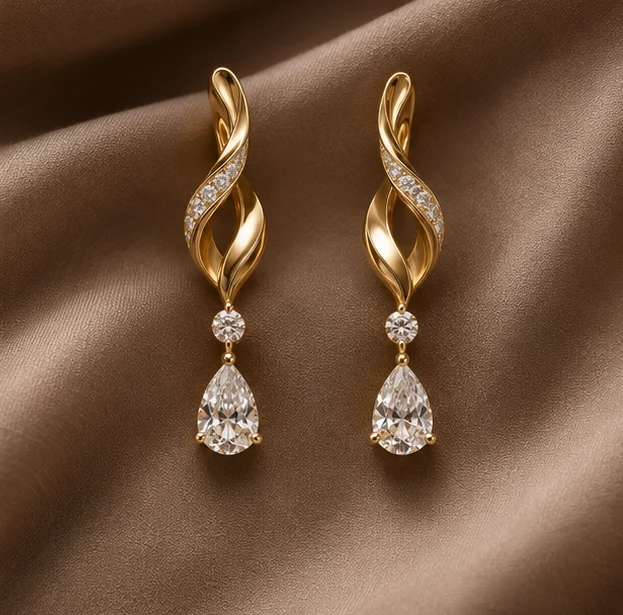
A real diamond with a different origin
A lab-grown diamond is a real diamond. It is made of the same carbon crystal as a mined diamond, with the same hardness, the same brilliance and the same fire. The only difference is where it formed: in a controlled lab over a few weeks instead of deep underground over a very long time.
That makes it very different from a diamond simulant. Cubic zirconia and moissanite look similar but are different materials altogether. A lab-grown diamond is not an imitation. It is a diamond.
How lab-grown diamonds are made: CVD and HPHT
There are two main methods. HPHT, short for high pressure high temperature, recreates the conditions deep in the earth inside a large press, where carbon crystallises around a small diamond seed.
CVD, or chemical vapour deposition, grows the diamond layer by layer. A carbon-rich gas such as methane is broken down in a chamber, and carbon atoms settle onto thin diamond seed plates. Many CVD diamonds are then given a post-growth heat treatment to improve their colour. India has become one of the world's largest producers of CVD lab-grown diamonds.
Neither method is better in itself. A well-grown, well-cut stone from either process can be beautiful. Judge the individual diamond by its grade, not by how it was made.
Telling lab-grown from natural
You cannot tell them apart by eye, and standard diamond testers will read both as diamond. Gem labs use specialist equipment that looks at growth patterns, fluorescence and trace elements to confirm the origin.
A reputable lab-grown diamond report clearly states that the stone is laboratory grown. Larger stones are usually laser inscribed on the girdle with the report number and a lab-grown mark, so the stone can always be identified.
Grading lab-grown diamonds
Lab-grown diamonds are graded on the same four Cs as natural diamonds: cut, colour, clarity and carat. IGI is the most widely used lab for lab-grown diamonds, especially in India. Because growers can control the process, high colours such as D to F and clarities such as VVS and VS are common, even in larger sizes.
Price and value
Lab-grown diamonds cost a fraction of a natural diamond with the same grades, and prices have come down steadily as production has grown. That means a customer can buy a much larger or higher-quality stone for the same budget.
The other side is resale. There is very little resale market for lab-grown diamonds. They are a great choice for the look and the budget, but they should not be bought as an investment.
Clear disclosure builds trust
Every lab-grown diamond should be described clearly as lab-grown, laboratory-grown or laboratory-created on tags, invoices and product pages. Clear disclosure protects your customers, protects your brand and keeps you in line with consumer rules in your market.
Designing with lab-grown diamonds
Lab-grown diamonds make bold designs affordable: larger solitaires, fully set eternity bands, tennis necklaces, statement earrings and iced-out men's and hip-hop pieces. Melee can be matched closely for colour across a whole production run.
At KNC we set lab-grown diamonds in 9K to 18K gold, Pt950 platinum and 925 sterling silver. Tell us the stone sizes, shape and quality range you need and we will quote with or without stones supplied.
Frequently asked questions
Are lab-grown diamonds real diamonds?
Yes. Lab-grown diamonds are chemically, physically and optically the same as mined diamonds. They are real diamonds with a different origin.
Will a lab-grown diamond pass a diamond tester?
Yes. Standard diamond testers identify lab-grown diamonds as diamond. Only a gem lab with specialist equipment can confirm whether a diamond is natural or lab-grown.
Is CVD or HPHT better?
Neither is better in itself. Both methods can produce high-quality diamonds. Compare individual stones on cut, colour, clarity and carat.
Do lab-grown diamonds get cloudy or change colour?
No. A lab-grown diamond is as stable as a natural one. If a diamond looks cloudy, it is usually just oil and dirt on the surface, which a good clean will remove.
Can lab-grown diamonds be set in silver?
Yes. Lab-grown diamonds are often set in 925 sterling silver, usually with rhodium plating, for affordable fine jewellery lines.
Workshop Checklist
Put it into practice
Buy lab-grown diamonds by their grades, not their growing method. Ask for an IGI or similar report on centre stones, agree melee quality in writing, and label every piece clearly as lab-grown.